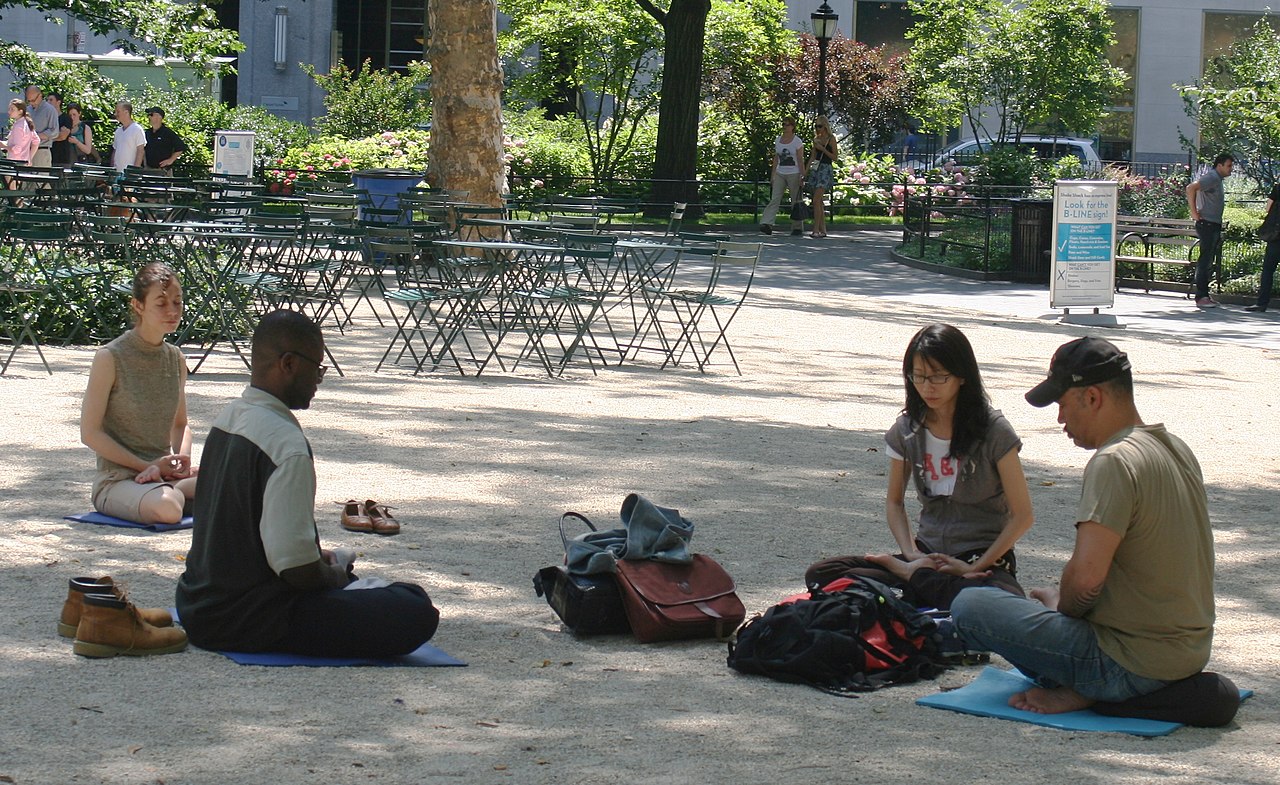
I failed at building a meditation practice four times before it finally worked. Each time, I started with enthusiasm, kept it going for a week or two, then quietly stopped. The fifth attempt, in the winter of 2016, was different. Not because I had found the perfect technique, but because I had finally stopped trying to do it perfectly.
Why morning, specifically
There is nothing sacred about meditating in the morning. Some people do their best sitting in the evening. But for me, and for most people I have spoken to who maintain a consistent practice, morning works better for one simple reason: the day has not happened yet.
By evening, you have accumulated decisions, conversations, frustrations, and distractions. Sitting down to meditate after a full day in Prague traffic and back-to-back meetings requires a kind of mental discipline that most of us do not have. In the morning, before the phone is checked and before the coffee is fully brewed, the mind is quieter. That quiet is easier to work with.
According to research published in the journal Frontiers in Psychology, morning meditation practitioners report higher rates of consistency compared to those who practice at other times of day. The mechanism seems to be habit formation: attaching the new behavior to an existing morning routine reduces the friction of starting.
The mistake I kept making
Every time I tried to build a meditation practice, I started with twenty minutes. This is what the books recommended. Twenty minutes twice a day for optimal results. I would sit down, set a timer for twenty minutes, and spend most of that time thinking about how long twenty minutes was.
The problem was not the duration. The problem was that I was treating meditation like a task to complete rather than a practice to inhabit. When you sit down with the goal of completing twenty minutes of meditation, every minute that passes feels like a small victory or a small failure. You are constantly evaluating. That evaluation is the opposite of what meditation is trying to cultivate.
The practice that fits into your actual life is the one that will change it. Five minutes every morning for a year is worth more than twenty minutes twice a week.
What actually worked: starting absurdly small
In November 2016, I committed to two minutes of meditation every morning. Not five. Not ten. Two. The rule was simple: sit down, set a timer for two minutes, and pay attention to my breath. That was it.
Two minutes is so short that there is no excuse not to do it. You cannot tell yourself you do not have time. You cannot tell yourself you are too tired. Two minutes is nothing. And yet, sitting down for two minutes every morning for thirty days built something I had never managed to build before: a habit.
After thirty days, I extended to five minutes. After another month, to ten. I now sit for twenty to thirty minutes most mornings, but I arrived there gradually, over about eight months. The key was never skipping more than one day in a row. Missing one day is a pause. Missing two days starts to feel like stopping.
The technique question
People spend a lot of time worrying about which technique to use. Breath awareness, body scan, loving-kindness, open monitoring, mantra-based practice. The honest answer is that for beginners, the technique matters much less than the consistency.
I started with simple breath awareness, which is what most teachers recommend for beginners. The instructions are minimal: sit comfortably, close your eyes, and pay attention to the physical sensation of breathing. When your mind wanders, which it will, notice that it has wandered and return your attention to the breath. That is the entire practice.
The Mindful Foundation describes this return of attention as the actual exercise. The wandering is not a failure. It is the equivalent of lifting a weight. The return is the rep.
Dealing with the Czech winter problem
One thing nobody mentions in meditation guides written for warmer climates: getting out of a warm bed in a Prague winter to sit in a cold apartment is genuinely difficult. For several winters, this was my biggest obstacle.
My solution was practical rather than spiritual. I started keeping a small electric heater next to my meditation spot. I would turn it on before getting dressed, so by the time I sat down, the corner was warm. I also started wearing a specific sweater only for meditation. This created a physical cue that helped my body understand what was about to happen.
Environmental design matters more than willpower. If the conditions for practice are uncomfortable, you will find reasons not to practice. Make it easy. Make it warm. Make it the path of least resistance.
What to expect in the first three months
The first month is mostly just getting used to sitting still. Your mind will be extremely busy. You will think about everything except your breath. This is normal. It does not mean you are bad at meditation. It means you are paying attention to your mind for the first time, and your mind has a lot to say.
The second month, something usually shifts. The sessions start to feel less like a struggle and more like a practice. You begin to notice patterns in your thinking. You start to recognize the feeling of attention wandering before it has fully wandered.
By the third month, most people report that they can tell the difference between days when they have meditated and days when they have not. Not in a dramatic way. More like the difference between a day when you have eaten breakfast and a day when you have not. A subtle quality of groundedness that is hard to describe but easy to notice when it is absent.
Resources I have found genuinely useful
I am skeptical of most meditation apps, but a few have been helpful for beginners. The guided sessions can be useful when you are starting out and are not sure if you are doing it right. The Headspace basics course is well-structured for complete beginners. After a few months, most people find they no longer need the guidance.
For reading, Jon Kabat-Zinn's book Wherever You Go, There You Are remains the most practical introduction I have encountered. It is not about technique. It is about the attitude that makes practice possible.